Robotic-assisted surgery to transform patient care
Advanced precision. Personalised surgery. Helping patients move with confidence.
-
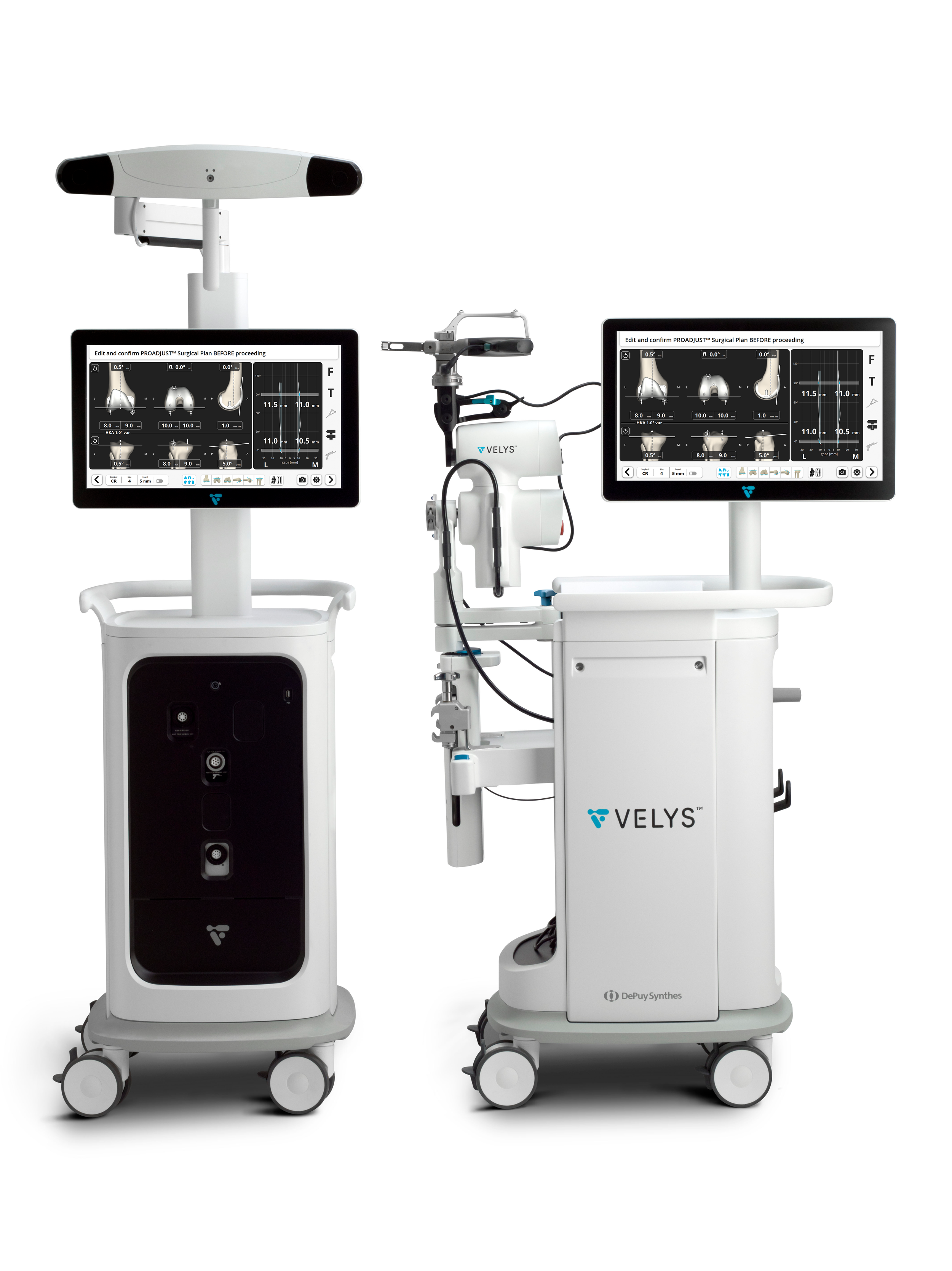
Unlike conventional joint replacement, which relies on manual instrumentation and the surgeon's assessment of anatomical landmarks, robotic-assisted surgery uses sophisticated computer technology to support surgical planning, bone preparation and implant positioning.
Depending on the robotic system, detailed scans or measurements taken during surgery create a three-dimensional representation of the patient's joint. This allows the surgeon to plan the procedure according to the patient's unique anatomy rather than relying solely on standardised measurements.
During the operation, the robotic system provides real-time guidance, helping the surgeon carry out the surgical plan with exceptional accuracy.
Importantly, the robot does not replace the surgeon. Mr Jenabzadeh remains responsible for surgical decisions and the operation itself. Robotic technology acts as an advanced tool, supporting the surgeon's skill, experience and clinical judgement.
The result is a highly individualised approach that aims to make joint replacement more precise, consistent and predictable.
-
1. Exceptional precision in implant positioning
One of the greatest advantages of robotic-assisted surgery is its ability to improve the accuracy of implant positioning.
In conventional surgery, surgeons use established anatomical landmarks and manual instruments to determine the placement and alignment of the artificial joint.
Although these techniques are highly effective, natural variations in anatomy can make precise positioning challenging.
Robotic technology allows surgeons to work with detailed anatomical information and receive real-time feedback, helping them achieve the intended implant position more consistently.
This is particularly important because the position of an implant influences joint mechanics, stability and how the replacement functions during everyday movement.
2. Surgery personalised to your unique anatomy
No two hips or knees are identical.
Every patient has individual differences in bone shape, joint alignment, ligament tension and movement patterns.
Traditional joint replacement techniques can accommodate these differences, but robotic assistance gives the surgeon additional information and planning tools to individualise the procedure.
For knee replacement, this may help optimise implant positioning and assess the balance of the joint throughout movement.
For hip replacement, robotic technology can support precise planning of implant size, orientation and position.
Rather than taking a one-size-fits-all approach, robotic-assisted surgery enables the procedure to be designed around the individual patient.
The goal is not simply to replace a damaged joint, but to restore comfortable, stable and functional movement.
3. Greater control and preservation of healthy tissue
A successful joint replacement involves more than positioning an implant. It also requires careful management of the surrounding bone, ligaments and soft tissues.
Some robotic systems use defined surgical boundaries to help the surgeon remove the planned amount of bone while avoiding unnecessary removal of healthy tissue.
In knee replacement, accurate bone preparation and careful ligament balancing are particularly important for joint stability and movement.
The technology may therefore support a more controlled approach, with the potential to preserve healthy structures where clinically appropriate.
4. The potential for improved comfort and recovery
For most patients, one of the biggest concerns about joint replacement is the recovery period.
How much pain will there be? How quickly will they walk? When can they return to normal activities?
Robotic-assisted surgery aims to optimise the mechanics of the new joint through accurate planning and placement. In theory, this may contribute to improved comfort, smoother rehabilitation and greater confidence in movement.
However, these results are not universal, and faster recovery or less postoperative pain cannot be guaranteed. Rehabilitation, general health and the surgical technique remain crucial to recovery.
5. Optimising the natural balance and movement of the joint
A joint replacement should do more than relieve pain. Ideally, it should allow patients to move comfortably and confidently during everyday activities.
In knee replacement, achieving appropriate ligament balance is an important part of creating a stable, functional joint.
Robotic systems can provide detailed feedback about alignment, joint gaps and, with some platforms, ligament tension during movement.
This additional information allows the surgeon to refine the surgical plan and implant positioning.
For hip replacement, precise implant orientation is important for joint stability and the mechanics of movement.
Robotic assistance can be especially valuable when patients have unusual anatomy or complex alignment considerations.
The aim is to achieve a replacement that works harmoniously with the patient's individual anatomy.
6. The potential for greater implant longevity
A hip or knee replacement is a significant investment in a patient's long-term health and mobility.
Patients understandably want their artificial joint to function effectively for as many years as possible.
Accurate implant positioning is an important factor in the mechanical performance of joint replacements.
By improving the consistency of alignment and positioning, robotic-assisted surgery may help reduce some of the mechanical problems associated with poorly positioned implants.
This raises the possibility of reducing implant wear or the need for revision surgery in selected circumstances.
However, long-term implant survival also depends on implant design, fixation, patient activity, bone quality and many other factors.
-
Choosing to undergo joint replacement is a major decision, and choosing the right surgeon is equally important.
Advanced technology is only one part of successful surgery. The surgeon's experience, clinical judgement, understanding of joint biomechanics and commitment to individualised care are fundamental.
Mr Reza Jenabzadeh's approach to robotic-assisted hip and knee replacement brings together two essential elements of modern orthopaedic care: the expertise of the surgeon and the precision of advanced technology.
For patients considering surgery, this approach offers several important advantages.
A personalised treatment strategy
Every patient's symptoms, lifestyle, anatomy and expectations are different. The decision to undergo surgery should begin with a comprehensive assessment of these individual factors.
Precision-led surgical planning
Robotic technology provides additional information to support detailed planning and accurate implant positioning, allowing the procedure to be tailored to the patient's joint.
-
While robotic-assisted surgery offers compelling technological advantages, it is not necessarily the best choice for every patient.
Conventional hip and knee replacement surgery has an excellent, well-established track record, and many patients achieve outstanding results without robotic assistance.
Robotic procedures may involve additional imaging, cost or operating time. As with all joint replacement operations, infection, blood clots, stiffness, dislocation or implant-related complications remain possible.
-
Living with persistent hip or knee pain can affect almost every aspect of daily life. But advances in joint replacement surgery mean that patients now have more treatment options than ever before.
Robotic-assisted hip and knee replacement represents an exciting development in orthopaedics, combining advanced digital planning, precise surgical guidance and a highly personalised approach to joint reconstruction.
For patients who value surgical precision, individualised planning and access to modern orthopaedic technology, robotic-assisted surgery is an option well worth exploring. description